

| Attribute | Details |
|---|---|
| Full Name | Jan R. Schiltmeijer |
| Date of Birth | Not publicly verified |
| Age | Not publicly verified years old (as of 2026) |
| Place of Birth | Haarlem, Holland |
| Nationality | Dutch |
| Profession | Painter, visual artist |
| Famous For | His painting career and former marriage to Amber Ruffin |
| Marital Status | Divorced; formerly married to Amber Ruffin |
| Children | No children publicly confirmed |
| Estimated Net Worth | Not publicly verified (as of 2026) |
Jan Schiltmeijer’s public story sits in an unusual place. He is not a celebrity in the usual sense, yet his name became widely searched because of his former marriage to comedian, writer, and television personality Amber Ruffin. Behind that attention is a much quieter record: a Dutch-born artist who trained in art direction, built a client-based painting career, and kept most of his private life outside the public glare.
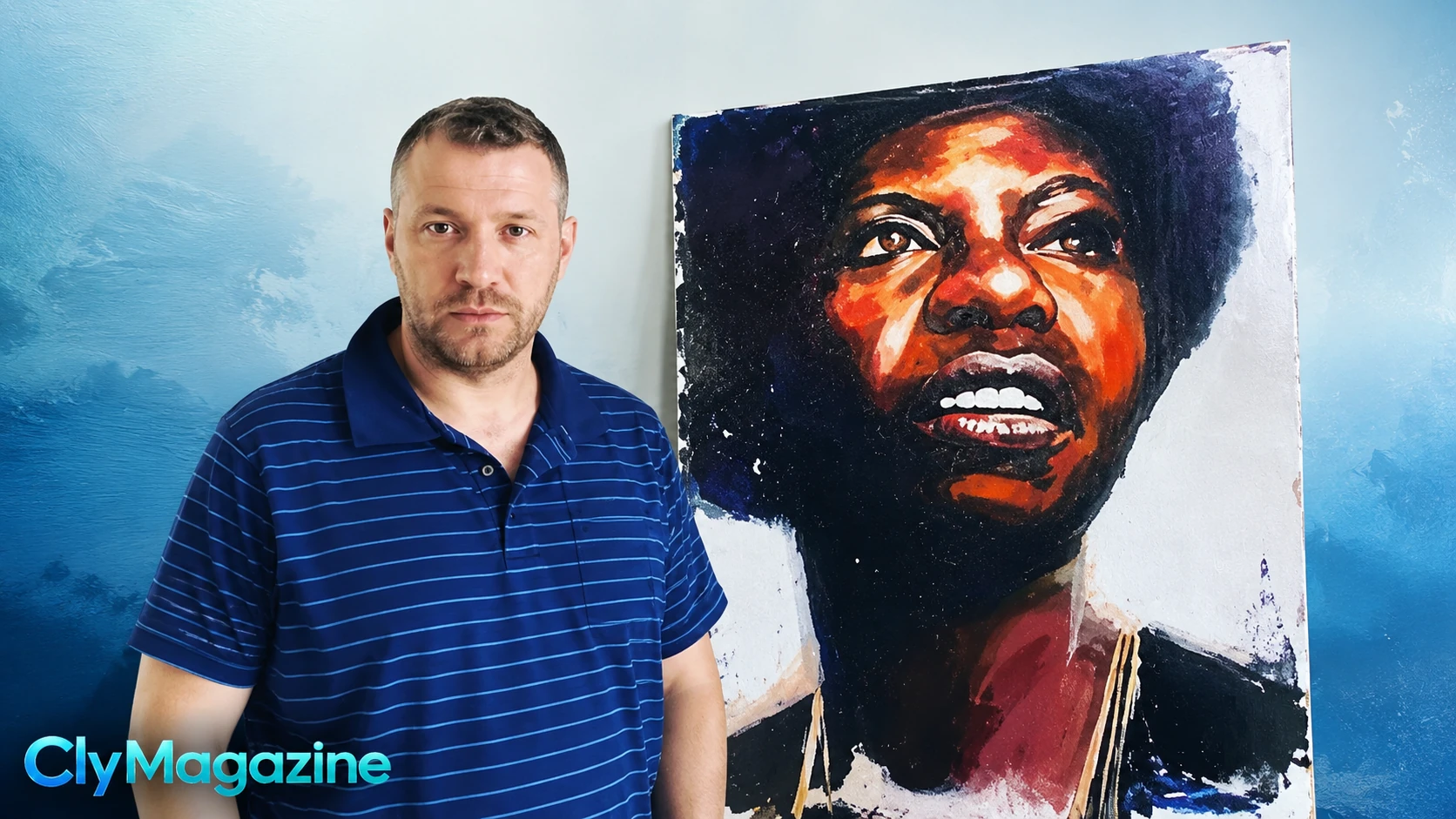
His own biography begins in Haarlem, Holland, and continues through Amsterdam, where he grew up and studied art direction. Schiltmeijer has described painting as the work that finally fit him, and his website presents him as a full-time painter since 2004. His work includes portraits, pop-cultural subjects, and vivid everyday objects rendered in acrylic and oil.
The most reliable portrait of Schiltmeijer is also a limited one. Public sources confirm his background, his career as a painter, his relationship timeline with Ruffin, and their 2023 divorce. Much else, including his date of birth, family history, exact age, and personal finances, remains private or unsupported by strong evidence.
Early Life and Family Background

Early Life and Family Background
Jan Schiltmeijer was born in Haarlem, Holland, according to his own artist website. Haarlem is a historic Dutch city near Amsterdam, but Schiltmeijer’s public biography does not offer detailed childhood stories, family names, or accounts of his earliest years. That absence matters because many online profiles try to fill in gaps with guesses, which can make a private person’s life seem more documented than it really is.
What is confirmed is that Schiltmeijer grew up in Amsterdam. The city appears to have been central to his early adult formation, both creatively and personally. It was where he studied, worked, and later returned after meeting Amber Ruffin during a trip to New York City.
There is no reliable public record naming his parents or siblings. His family background beyond his Dutch origins has not been made part of his public story. A responsible biography should treat that silence with care rather than turn it into speculation.
Education and Early Creative Training
Schiltmeijer’s own website says he attended a three-year specialized course in art direction in Amsterdam. The page does not clearly confirm the exact school name, dates of attendance, or teachers who shaped him. Some secondary profiles mention more specific education details, but those claims should be handled with caution unless backed by a stronger source.
After his art-direction training, Schiltmeijer worked in that field for two years. That early professional step gives useful context for his later painting style, which often shows a strong sense of composition, graphic clarity, and image-making. Art direction also requires a practical understanding of visual impact, which fits the clean, direct presentation of many works in his online portfolio.
His move from art direction to painting was not presented as a celebrity-style breakthrough. It appears to have been a working artist’s decision, made after testing what kind of creative life he wanted. That practical beginning is one reason his career reads less like fame-seeking and more like a steady commitment to making art.
Becoming a Full-Time Painter in 2004
The clearest career milestone in Schiltmeijer’s own account is 2004. That is the year he says he began painting full time. He also says he built a clientele before launching a website, which suggests an early career based on direct commissions, personal referrals, and private buyers rather than broad media attention.
His artist statement describes original acrylic paintings with color built layer by layer. That detail gives a useful clue to how he wants viewers to understand the work. He presents painting not only as image-making but as a way to create depth, brightness, and emotional presence through repeated layers of color.
Schiltmeijer’s website also shows his interest in portraiture. He has described the creation of a lasting portrait as a meaningful way to mark someone’s presence. That approach places his work close to clients and collectors, not only galleries and critics.
Art Style and Known Works
Schiltmeijer’s paintings often use recognizable subjects, bold imagery, and vivid color. His online portfolio includes works titled “Bruce Lee,” “Muhammad Ali,” “Lincoln,” “Shark,” and “Jelly Beans.” Those titles show a range from famous figures to simple objects, with both treated as worthy of attention.
The materials listed on his site include acrylic and oil, and several works are marked as sold. The images suggest an artist drawn to clear outlines, saturated color, and subjects with instant visual pull. His portfolio also shows that he has worked across portraiture, animals, icons, and still-life-like object paintings.
A verified exhibition notice from The Reader in Omaha adds another piece to the career record. In July 2019, The B Side of Benson Theatre presented “Break,” a show of Schiltmeijer’s work that focused on the beauty of everyday objects. The notice also described his paintings as touching on American heroes, movie stars, and musicians, which matches the pop-cultural thread visible in his portfolio.
Meeting Amber Ruffin
Schiltmeijer’s best-known personal relationship was with Amber Ruffin. Ruffin has written publicly that they met in 2008 while both were living in Amsterdam but happened to be visiting New York City. About a week later, they had their first date in Amsterdam.
That meeting story is one of the few personal details about Schiltmeijer supported by a strong first-person source. Ruffin’s account places the relationship in a cross-cultural setting from the beginning. He was Dutch, she was American, and their early relationship moved between Amsterdam and the United States.
The couple dated for two years before marrying in 2010. Their relationship later became part of Ruffin’s public writing about interracial marriage and racism in America. In that context, Schiltmeijer appeared less as a public personality than as the spouse whose perspective changed as he saw what Ruffin experienced.
Marriage, Move to the United States, and Public Attention
After marrying in 2010, Schiltmeijer and Ruffin moved to Los Angeles in 2011. Ruffin has written that the move exposed him to forms of anti-Black discrimination that he had not understood in the same way before living in the United States. Her essay used their marriage to explain how racism can become visible to someone through the experiences of a loved one.
That public account is one of the rare places where Schiltmeijer appears in a broader social context. Ruffin described him as white and Dutch, and her writing showed how their interracial marriage became a lens for discussing race. The article did not turn him into the center of the story, but it did make him part of a larger conversation about awareness, privilege, and American life.
As Ruffin’s career rose, Schiltmeijer stayed comparatively private. Ruffin became known through “Late Night with Seth Meyers” and later “The Amber Ruffin Show,” while Schiltmeijer’s public presence remained tied mainly to his art website. That contrast shaped how many readers came to know his name: not through interviews or television appearances, but through searches about Ruffin’s personal life.
Divorce from Amber Ruffin
Schiltmeijer and Ruffin are no longer married. New York State court records show the case caption “Amber M. Ruffin v. Jan R. Schiltmeijer” in Rockland County Supreme Court. The case was listed as an uncontested matrimonial matter, with judgment of divorce filings dated December 5, 2023.
The divorce later received more public attention after Ruffin joked about it on “Late Night with Seth Meyers” in 2024. That attention should not blur the basic facts. The legal record confirms the divorce, but the reasons for the split have not been publicly laid out in a detailed, verified way.
There is also no publicly confirmed record of children from the marriage. Several secondary sources say the couple had no children, but strong primary sourcing on that point is limited. The fairest wording is that no children are publicly confirmed.
Net Worth and Sources of Income
Jan Schiltmeijer’s net worth is not publicly verified. Some entertainment and biography websites publish estimates, but they do not appear to be based on financial records, art-market documentation, contracts, or direct reporting. A trustworthy article should not present those figures as fact.
The most clearly supported source of income is his work as a painter. His website describes original paintings and portrait work, and it says he developed a clientele before creating an online presence. Some works in his portfolio are marked as sold, which supports the basic fact that he has sold art.
There is no verified public record of major brand deals, large contracts, corporate ownership, or high-value auction sales. There is also no strong evidence of major art awards or museum acquisitions in the sources reviewed. That does not diminish his work, but it does set limits on what can be responsibly claimed.
Current Life and Work
As of 2026, the safest public description of Schiltmeijer is that he remains known as a Dutch-born painter. His artist website continues to show work through at least 2023, including portraits and object-based paintings. The site also presents him as being connected to New York, though readers should understand that artist websites are not always updated in real time.
Recent public interest in his name has mostly been tied to Ruffin’s life after their divorce. In 2024, coverage of Ruffin’s public coming-out post mentioned her former marriage to Dutch artist Jan Schiltmeijer. That coverage renewed searches about him, even though he did not appear to seek new public attention himself.
There are social media traces suggesting tattoo-related activity connected to his name, but that information is not strong enough on its own to redefine his career. Without a direct statement, verified profile, or formal source, painter remains the most accurate public label. His current day-to-day life, residence, and personal relationships are not publicly documented in detail.
Public Image and Reputation
Schiltmeijer’s public image is shaped by restraint. Unlike many people connected to well-known entertainers, he has not built a large public persona from the relationship. His own online presence centers on art, not celebrity access.
That low profile has created a strange imbalance. Readers often search for him because of Amber Ruffin, but the strongest material about him concerns his training, paintings, and creative path. A good profile needs to hold both facts at once without reducing him to someone else’s former spouse.
His reputation, based on available evidence, is that of a working artist with a clear visual style and a private personal life. The 2019 Omaha exhibition notice shows that his work reached public venues beyond private commissions. His website shows a consistent interest in bold subjects, rich color, and paintings designed to be direct and accessible.
Lesser-Known Facts About Jan Schiltmeijer
One lesser-known fact is that Schiltmeijer says he had a clientele before he had a website. That detail suggests his early painting career grew through direct relationships rather than online promotion. It also gives the story a more grounded shape than the usual internet biography format.
Another useful detail is his shift from art direction to painting after two years in the field. That move helps explain why his work can feel image-conscious and commercially clear without being impersonal. He seems to have carried some of the discipline of design into a more personal art practice.
His meeting with Amber Ruffin also had an unusual setup. They were both based in Amsterdam when they met, but the first encounter happened in New York City. That small geographic twist gives their relationship story a memorable shape without requiring any invented drama.
Frequently Asked Questions
Who is Jan Schiltmeijer?
Jan Schiltmeijer is a Dutch-born painter and visual artist. He is also known to many readers as the former husband of American comedian and writer Amber Ruffin. His own website says he was born in Haarlem, grew up in Amsterdam, and began painting full time in 2004.
What is Jan Schiltmeijer famous for?
Jan Schiltmeijer is known for his painting career and his former marriage to Amber Ruffin. His art includes portraits, pop-cultural subjects, and everyday objects painted in vivid color. Public interest in him increased because Ruffin became a well-known television writer, performer, and host.
Are Jan Schiltmeijer and Amber Ruffin still married?
No, Jan Schiltmeijer and Amber Ruffin are divorced. New York State court records show an uncontested matrimonial case with judgment of divorce filings dated December 5, 2023. The reasons for the divorce have not been publicly explained in a detailed verified account.
Does Jan Schiltmeijer have children?
No children are publicly confirmed for Jan Schiltmeijer. Some secondary sources say he and Amber Ruffin did not have children, but strong primary sourcing on that point is limited. A careful biography should avoid naming or counting children unless reliable confirmation exists.
What is Jan Schiltmeijer’s net worth?
Jan Schiltmeijer’s net worth is not publicly verified. Some online biography sites publish estimates, but those figures are not supported by clear financial records or reliable reporting. The verified income picture is limited to his work as an artist, including original paintings and portrait commissions.
Conclusion
Jan Schiltmeijer’s story is not a conventional fame biography. The verified record points to a Dutch artist who trained in visual communication, chose painting as his full-time work in 2004, and built a career around portraits, vivid objects, and recognizable cultural figures. His public identity became wider because of Amber Ruffin, but his own work deserves to be described on its own terms.
The challenge in writing about him is the limited record. Many details that readers often expect in a biography, including birth date, family background, exact age, and net worth, are not reliably public. Treating those gaps honestly is part of respecting both the subject and the reader.
Schiltmeijer’s lasting public appeal may come from that mix of visibility and privacy. He is familiar enough to be searched, yet private enough that the facts still need careful handling. That makes him a reminder that not every person near fame is trying to become famous.


