

| Attribute | Details |
|---|---|
| Full Name | Marlene Knaus |
| Date of Birth | Not publicly confirmed |
| Age | Not publicly confirmed (as of 2026) |
| Place of Birth | Not publicly confirmed |
| Nationality | Not publicly confirmed |
| Profession | Publicly described in later secondary sources as a former model, though detailed career records are limited |
| Famous For | Her marriage to Niki Lauda and her place in the Lauda family story |
| Marital Status | Divorced; married Niki Lauda in 1976 and divorced in 1991 |
| Children | Two sons, Lukas Lauda and Mathias Lauda |
| Estimated Net Worth | Not publicly verified (as of 2026) |
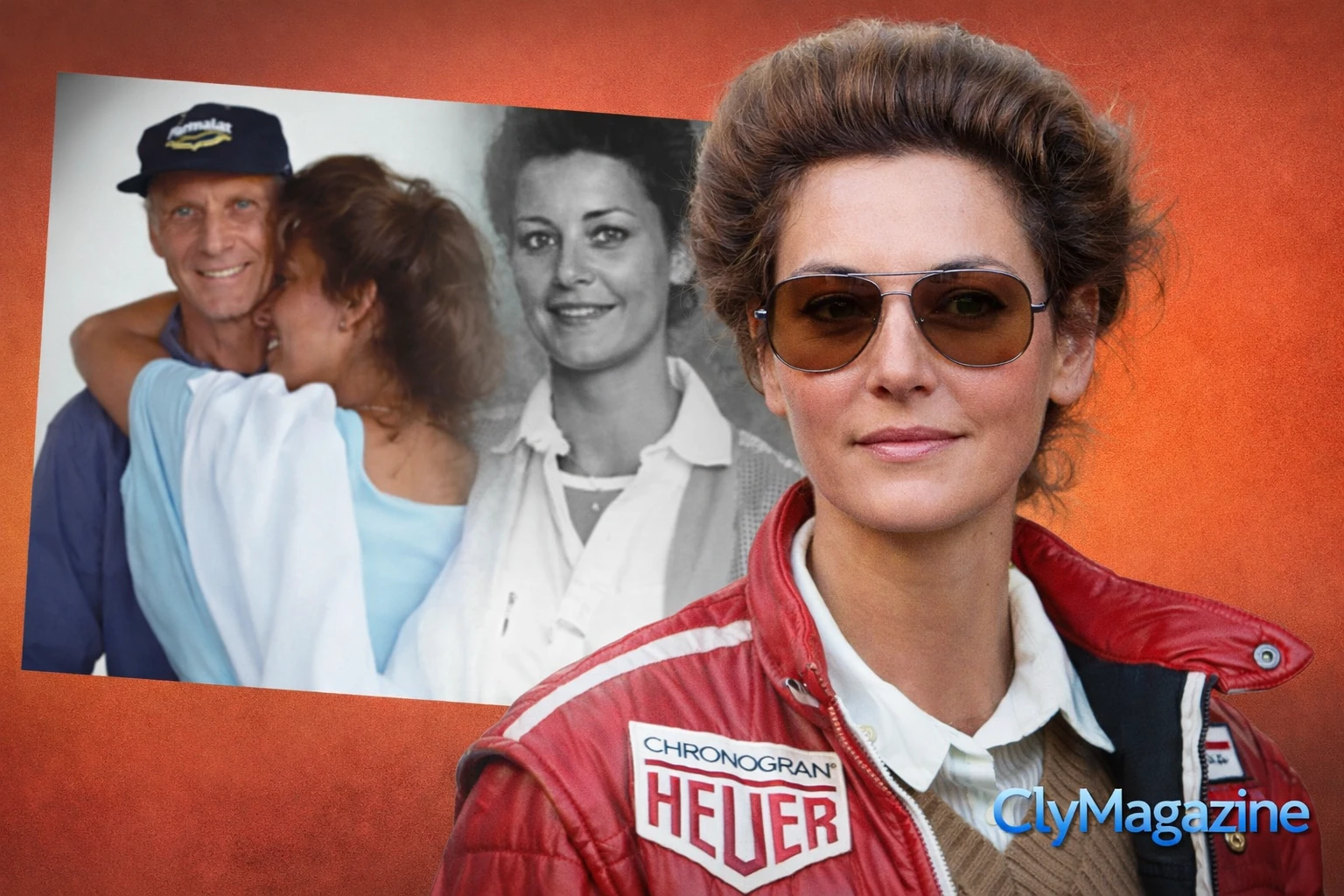
Marlene Knaus remains one of those rare public figures whose name is widely recognized, even though much of her life has stayed out of reach. She is known around the world because of her marriage to Formula 1 legend Niki Lauda, yet the story that survives in public is far more restrained than the internet often suggests. What can be confirmed is meaningful enough on its own: she stood beside Lauda during a dramatic era in motorsport history, raised a family with him, and later returned to a life defined more by privacy than publicity.
That contrast is part of what makes her biography so interesting. In the 1970s, Marlene Knaus appeared in the orbit of European celebrity and racing culture, photographed in public and recognized for her striking style. In later decades, she became far less visible, even as Niki Lauda’s fame kept the family name in global view. Her story is not one of constant public reinvention, but of presence, family, and retreat.
Any serious account of Knaus also has to acknowledge how much weak information surrounds her. Many online biographies repeat exact birth years, places of origin, and career claims that are not backed by strong public records. A more careful portrait shows a woman whose role in modern sports history is real, even if many details of her early life and professional identity remain private or uncertain.
Early Life and Family Background
The first honest fact about Marlene Knaus is that her early biography is not well documented in strong public sources. Her date of birth, birthplace, parents, and schooling are often stated online with great confidence, but those claims tend to come from copied biography pages rather than primary records or major published profiles. That means a responsible article has to resist the urge to fill in the blanks. In Knaus’s case, uncertainty is part of the truth.
This absence of detail does not make her story less interesting. It changes the way the story should be told. Rather than building a false narrative around childhood influences or family routines that cannot be verified, it makes more sense to begin where the public record becomes clear: in the European social world of the 1970s, where Marlene Knaus first appears in archival photographs and press material.
Even there, the record asks for care. Later secondary sources often describe her as a former model, and that may well be accurate, but the public documentation of her career is thin. There is no widely cited body of interviews, agency history, or career timeline that would allow a writer to describe her professional life in the same detail available for major film, music, or sports figures. The safest reading is that she moved in visible, stylish circles and was remembered for her look and presence, but her full early path remains largely private.
Public Life in the 1970s
Marlene Knaus enters the historical record most clearly through photographs and public appearances from the mid-1970s. Archival image captions place her with Niki Lauda at Brands Hatch in England on July 1, 1974, which shows that she was already part of his public world before their marriage. That matters because many short biographies jump straight from name recognition to marriage without tracing the period before it. The visual record suggests a relationship that was visible earlier than casual summaries often imply.
There is another detail from 1974 that makes her timeline more interesting. A Getty archive caption from December 17, 1974, places Knaus in Switzerland as actor Curd Jürgens’s companion. Rather than forcing this into a tidy storyline, it is better to treat it as evidence that her social life in that period was broader and more layered than simplified internet retellings suggest. It also shows why her biography needs caution, since even public chronology can become muddled when later sources compress events.
By the middle of the decade, Niki Lauda himself was no ordinary racing driver. He was becoming one of Formula 1’s defining figures, known for precision, intelligence, and a direct style that set him apart from many of his peers. Anyone close to him was bound to attract attention, and Knaus did. Her image from that era still carries the glamour of 1970s European racing culture, but the deeper story is less about fashion myth and more about proximity to a man whose career would become one of the sport’s enduring legends.
Marriage to Niki Lauda
In 1976, Marlene Knaus married Niki Lauda. It was a year that would become central not only to Lauda’s life but also to the public memory of the couple. During that season, Lauda suffered his near-fatal crash at the Nürburgring, one of the most searing moments in Formula 1 history. Knaus’s name has remained tied to that era ever since, because marriage placed her at the center of one of sport’s most dramatic human stories.
The marriage gave Knaus a public identity that has lasted far longer than most spouses of sports stars ever experience. She was no longer simply a stylish figure in archival photographs; she became part of the Lauda story at the very moment it turned from racing success into something larger and more emotional. That link explains why her name still draws curiosity decades later. Readers want to understand who she was, not just who she married.
Archive photography from 1977 shows her publicly established as Lauda’s wife. She appeared with him at race-related events, including the Dutch Grand Prix, and photographs from that same year also place the couple at home near Salzburg. Those images matter because they show a life that was not confined to public spectacle. They suggest a marriage lived both in the high-pressure atmosphere of Formula 1 and in ordinary domestic settings away from the track.
Family Life and Motherhood
The marriage produced two sons, Lukas Lauda and Mathias Lauda. Of the two, Mathias became the better-known public figure because he followed his father into motorsport and built a racing career of his own. That continuation of the family’s connection to racing is one reason Marlene Knaus remains relevant in later Lauda family coverage. She is not just part of Niki Lauda’s past; she is also part of the family line that continued in public view.
Motherhood appears to have shaped the next chapter of her life more than public ambition did. The strongest later reporting on Knaus almost always refers to her first as the mother of Lukas and Mathias, rather than as an independent celebrity or media personality. That may seem limiting on the surface, but it also reveals where the most solid facts lie. In a life where many personal details remain private, family is the area most firmly anchored in the record.
There is also a strong Ibiza link in the family’s later story. Mathias Lauda said in an official FIA World Endurance Championship interview that he grew up in Ibiza, a detail that gives context to years of reporting that connect the Lauda family to the island. It is a useful fact because it confirms a family setting without pretending to settle Knaus’s exact present-day residence. As with much of her biography, the clearest facts are often nearby rather than absolute.
Life After the Divorce
Marlene Knaus and Niki Lauda divorced in 1991. That date is well established, and it marks the formal end of a marriage that had lasted fifteen years. By that point, Lauda’s public life had already grown far beyond racing results, and the family story had become more complex. Yet the divorce did not erase Knaus from the wider Lauda narrative.
That lingering connection became clear many years later. When Niki Lauda died in May 2019, Knaus attended his funeral in Vienna. Coverage of the day described a family gathering marked by grief, respect, and the realities of a modern patchwork family. Her presence carried weight because it showed that even after the marriage ended, she remained part of the emotional architecture around Lauda.
This is one of the most revealing parts of her biography. Public life often turns former spouses into footnotes, especially when a marriage ended decades earlier. Knaus’s appearance at the funeral suggested something more durable than a closed chapter. It hinted at a bond shaped by shared history, children, and a relationship that still mattered, even after divorce had long since changed its form.
Career, Public Image, and the Limits of the Record
One of the most repeated claims about Marlene Knaus is that she was a model. That description appears across a wide range of secondary sources, and it may well reflect how she was known during her younger years. At the same time, the public record does not provide a richly detailed, independently documented career timeline. There are no widely cited campaign lists, magazine features, or formal career retrospectives that would let a writer map her professional life with confidence from year to year.
That gap is a defining part of how she has been remembered. Knaus survives in public memory more as a figure of style and presence than as someone with a heavily documented standalone career. She appears in archives, in motorsport stories, and in later family coverage, but not in the sort of self-authored public record that many modern public figures leave behind. Her image is strong; her documented career record is limited.
There is also a lesson here about public myth. Because Knaus was photogenic, elegant, and linked to a globally famous racing driver, later biographies often expand her life into something more neatly glamorous than the available evidence supports. A warmer and more truthful portrait accepts the limits of the record. She may have lived close to celebrity, but that does not mean every elegant rumor about her life should be repeated as fact.
Wealth, Business, and Public Recognition
There is no reliable public basis for assigning Marlene Knaus a precise net worth. Many biography websites offer exact figures, but they do not show transparent sourcing, and the numbers vary widely. A careful biography should say that clearly rather than turning weak estimates into a headline. Her financial life, at least in the public record, remains private.
The same caution applies to claims about business ventures, endorsements, ownership stakes, or large independent income streams. None of these areas is firmly documented in strong public reporting. What can be said is that her public relevance comes from her place in a famous family story, not from a well-documented empire of her own. That distinction matters, especially in an online culture that often assumes every recognizable name must come with a polished business profile.
As for recognition, Knaus’s public reputation rests less on awards or formal honors than on memory. She is remembered because she was there during a defining period of Niki Lauda’s life and because she remained part of the family’s emotional world long afterward. In that sense, her standing is cultural rather than institutional. She occupies a place in Formula 1 history not as a competitor, but as a human presence in one of its most enduring family stories.
Marlene Knaus in Recent Years
Recent reporting gives only a limited view of Marlene Knaus’s life from 2024 through 2026, and that too should be stated plainly. She does not appear to maintain a major public profile, and there is no strong evidence of an active public-facing role, business project, or media career in those years. The clearest recent picture is one of privacy rather than renewed visibility. That privacy seems deliberate.
What has entered the record in recent years is deeply personal. Reporting in 2024, based on family remarks, described Knaus as still profoundly affected by Niki Lauda’s death and said she lit a candle for him every day. Whether one sees that as ritual, memory, or grief, it offers one of the few intimate yet traceable glimpses into her present emotional life. It also helps explain why later coverage of her has a quieter, more reflective tone.
The few public details that do surface point back toward family rather than fame. Her sons remain the clearest bridge between her earlier public life and the present day. Through them, the Lauda name continues to carry both sporting and family meaning. Through her, that story keeps a human center.
Marlene Knaus in Popular Memory
For many younger readers, Marlene Knaus is also known indirectly through film. Ron Howard’s 2013 movie Rush, which dramatized the 1976 Formula 1 season and Niki Lauda’s rivalry with James Hunt, brought renewed attention to the people around Lauda as well as to Lauda himself. In the film, Knaus was portrayed by Alexandra Maria Lara. That portrayal helped introduce her name to viewers who had no memory of the original era.
Yet film memory and biography are not the same thing. Cinema condenses lives and sharpens emotions to fit a dramatic arc. Knaus’s real story, as far as it can be verified, is both simpler and more elusive. She was present at important moments, linked to one of racing’s towering figures, and then chose a much more private path than popular culture usually rewards.
That may be why interest in her never quite disappears. Marlene Knaus represents a kind of public figure who has become less common: someone connected to fame, visible at key moments, yet never fully absorbed by celebrity culture. In an age of constant exposure, that reserve makes her more compelling, not less. The unanswered parts of her biography are part of what keeps readers returning to her story.
Frequently Asked Questions
Who is Marlene Knaus?
Marlene Knaus is best known as the first wife of Formula 1 legend Niki Lauda and the mother of Lukas and Mathias Lauda. Her name remains linked to one of the most famous families in modern motorsport. Although she appeared publicly during the 1970s, especially in the years around her marriage, much of her personal background has remained private. That mix of visibility and privacy is a big reason people still search for her today.
Was Marlene Knaus really a model?
She is often described in later secondary sources as a former model, but the detailed public record of that career is limited. There is not a widely documented list of credits or milestones that would allow a writer to describe her modeling work in depth with total confidence. So the label may be accurate, but it should be used carefully. A responsible biography notes the description while also acknowledging the lack of a full documented career timeline.
When did Marlene Knaus marry and divorce Niki Lauda?
Marlene Knaus married Niki Lauda in 1976 and divorced him in 1991. Those dates are among the clearest and most consistently supported facts in her public biography. Their marriage lasted through a dramatic period in Lauda’s racing career and into later family life. Even after the divorce, Knaus remained part of the wider Lauda family story.
How many children does Marlene Knaus have?
She has two sons with Niki Lauda: Lukas Lauda and Mathias Lauda. Mathias became publicly known through his own racing career, which kept the family’s connection to motorsport alive for another generation. Lukas has been less publicly visible, though he appears in family-related coverage. The confirmed public record is strongest and most stable when it comes to these family facts.
What is Marlene Knaus doing now?
There is no strong public evidence that Marlene Knaus holds a current public role or maintains an active media presence. The clearest recent reporting presents her as living privately and still carrying the emotional weight of Niki Lauda’s death. Family-linked coverage in 2024 described her as deeply affected by that loss. Beyond that, many online claims about her present life are either thinly sourced or not verified.
Conclusion
Marlene Knaus’s biography resists the usual shape of celebrity storytelling. She was close to fame without ever fully surrendering herself to it, and that has left a record that is both visible and incomplete. What survives clearly is enough to matter: a marriage to Niki Lauda, two sons, a place in the emotional history of Formula 1, and a long return to privacy. For many public figures, mystery is manufactured, but in her case it seems genuine.
There is something quietly compelling about a life that can’t be flattened into easy headlines. Knaus appears in photographs, in family memory, and in the margins of sporting history, yet she never became a conventional public narrator of her own story. That absence should not be treated as a weakness. It is part of what gives her biography its distinct tone.
She also reminds readers that not every important person in a famous story leaves behind a flood of interviews, memoirs, and self-explanations. Some remain known through moments, relationships, and the impressions they made on others. Marlene Knaus belongs to that category. Her public legacy rests on the grace of her presence and the lasting weight of the family history around her.
As interest in Niki Lauda and Formula 1 continues, curiosity about Marlene Knaus will likely continue as well. The best way to tell her story is not to fill its silences with invention, but to respect what is known and admit what is not. That approach leaves room for dignity, which feels fitting in her case. In the end, her biography is less about spectacle than about the quiet endurance of memory.


