

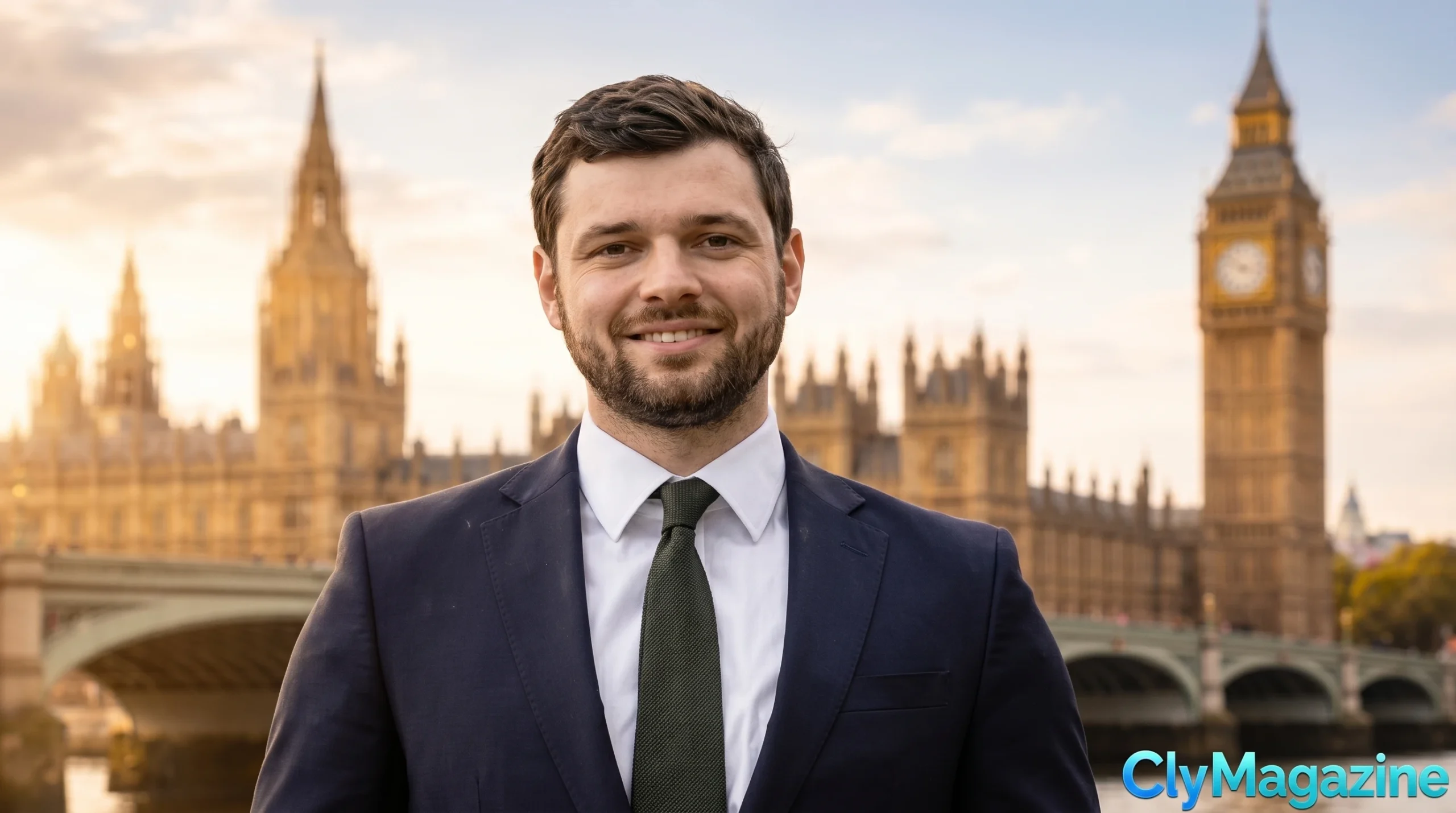
Henry Zeffman is one of the more visible names in British political journalism, yet one of the least publicly revealing about his private life. That contrast explains why searches for “Henry Zeffman partner” have grown alongside his move into a senior BBC News role. Readers know his byline, his Westminster coverage, and his appearances around major political stories, but they know very little about the person outside work.
The clearest answer is also the most responsible one: Henry Zeffman has not publicly confirmed a spouse, partner, or children in reliable sources. Professional profiles focus on his journalism, not his home life. For a public-interest article, that matters because curiosity should not be treated as evidence.
Zeffman’s story is best understood through his career rather than speculation about romance. He moved from award-winning young political reporter to The Times and then to BBC News, where he became Chief Political Correspondent in 2023. His rise has been unusually fast, but the record shows steady newsroom work rather than celebrity self-promotion.
Early Life and Family Background
Public information about Henry Zeffman’s early life is limited. He has not made family history, parents, siblings, or childhood details a major part of his public identity. That absence should be respected rather than filled with soft guesses or recycled claims from weak biography pages.
What can be said with care is that Zeffman was educated in Britain and entered journalism through a route often associated with political reporting. Public biographical summaries connect him with Highgate School in North London and later with Brasenose College, Oxford. These details appear in public profiles, though a final fact-checker should still prefer direct institutional confirmation where possible.
There is no strong public record confirming his birthplace or exact date of birth. Some secondary sources suggest he was born in the early 1990s, with 1994 often repeated, but that should not be treated as fully settled without a stronger source. A careful biography should say his exact age is not reliably confirmed, even if he is widely described as being in his early 30s.
Education and Early Training
Zeffman studied Philosophy, Politics and Economics at Brasenose College, Oxford, according to public biographical sources. PPE has long been associated with British politics, journalism, government, and public life, which makes it a relevant part of his professional background. It also helps explain why he moved naturally toward Westminster reporting, where political systems and policy choices are central to the work.
After Oxford, Zeffman was connected with journalism training at City University. The Anthony Howard Award winners page described him in 2015 as a 23-year-old City University journalism student. That source is especially useful because it gives a clear early-career marker without needing to rely on rumor or unsourced biography material.
The Anthony Howard Award became an early turning point in his professional path. A Brasenose College publication said the award gave him placements at The Times, The Observer, and New Statesman. Those placements placed him close to national political journalism before he became widely known to general audiences.
Career Beginnings and the Anthony Howard Award
In 2015, Henry Zeffman won the Anthony Howard Award for Young Journalists. The award is designed for emerging political writers and is named after Anthony Howard, the respected British journalist, editor, and political commentator. Winning it gave Zeffman an early public sign of promise in a field where access, judgment, and persistence matter.
The award also helps explain how his career gathered speed. Instead of appearing suddenly at the BBC, Zeffman built his reputation through reporting, newsroom placements, and newspaper work. His early record shows a journalist moving through competitive institutions rather than a media personality built around private fame.
This matters for anyone writing about his partner or personal life. Zeffman’s public profile grew because of his work, not because he invited attention to his relationships. That distinction should shape the whole article and keep the focus on what is verified.
Henry Zeffman at The Times
Zeffman worked at The Times from 2016 to 2023, according to his Times profile. During that period, he became part of the paper’s political reporting team and was based in Westminster. His role eventually included the title Associate Political Editor, a senior position within one of Britain’s best-known newspapers.
The Times profile also states that he previously served as Washington Correspondent. That international experience matters because it shows his work was not limited to domestic Westminster reporting. Covering Washington would have required him to follow American politics, institutions, and the relationship between British and United States political life.
His years at The Times gave him the core reputation that later made the BBC move possible. Political reporting at that level depends on contacts, timing, and the ability to explain fast-moving events without losing accuracy. By the end of his Times period, Zeffman had become known inside the industry as a serious political journalist.
Awards and Professional Recognition
One of the strongest verified honors in Zeffman’s record is his Young Journalist of the Year award at the 2019 National Press Awards. The Society of Editors’ winners gallery named him the winner for his work at The Times. The judges praised his political reporting and the strength of his contacts at a relatively early stage of his career.
That recognition is more useful than vague claims about fame or influence. It shows that editors and industry judges saw him as a rising political reporter based on published work. It also gives readers a concrete reason to understand why his career advanced quickly.
The 2015 Anthony Howard Award and the 2019 National Press Awards recognition form a clear professional pattern. Zeffman was first identified as a promising young political journalist, then recognized again after several years in national reporting. Those milestones are better evidence of reputation than social media attention or search traffic.
Move to BBC News
In 2023, Zeffman was appointed BBC News Chief Political Correspondent. Cision’s media-moves notice reported the appointment while identifying him as Associate Political Editor at The Times. The notice said he would take up the BBC role later that summer.
The move marked a shift from newspaper journalism into a broader broadcast and digital news environment. At the BBC, political correspondents must write, explain, appear on camera, and respond quickly to national developments. That kind of job places a journalist in front of a much larger public audience.
His appointment also explains why readers now search for more personal details about him. Broadcast visibility often turns professional journalists into familiar public figures. In Zeffman’s case, that visibility has not been matched by any clear public disclosure about a partner, spouse, or children.
Henry Zeffman Partner and Relationship Status
There is no reliable public confirmation that Henry Zeffman is married. There is also no strong source confirming a wife, husband, girlfriend, boyfriend, long-term partner, or children. The safest and most accurate wording is that his relationship status has not been publicly confirmed.
This does not mean writers should call him single. It also does not mean he is secretly married or hiding a family. It means the available public record does not support a clear statement either way.
Many biography-style pages try to answer private-life searches with confident wording. That is risky because the absence of public information is not proof of any specific status. A trustworthy article should say that Zeffman appears to keep his personal life private and that reputable professional sources focus on his journalism.
Privacy and Public Curiosity
The search interest around “Henry Zeffman partner” says as much about modern media habits as it does about Zeffman himself. Viewers often become curious about journalists they see covering major public events. The same curiosity that follows actors, presenters, and politicians can attach to correspondents who appear regularly in national news.
Yet journalists are not public figures in exactly the same way as elected officials or celebrities. Their work may be public-facing, but their relationships do not become public property unless they choose to share them or the information has clear public relevance. In Zeffman’s case, no such verified personal-life disclosure has been found.
A respectful biography can still answer the reader’s question directly. The answer is that his partner, if he has one, has not been publicly identified in reliable sources. That is not an omission; it is the accurate boundary of the record.
Net Worth, Salary, and Income Sources
Henry Zeffman’s net worth has not been reliably verified. No strong public source confirms a personal wealth figure, salary, property holdings, business ventures, or private investments. Any article giving a precise dollar amount would be relying on speculation rather than evidence.
His known income source is journalism. He worked for The Times from 2016 to 2023 and then joined BBC News as Chief Political Correspondent. Those roles suggest a stable professional career, but they do not allow a responsible writer to calculate his personal wealth.
The BBC publishes salary information for some high-earning on-air figures, but that does not automatically provide a figure for every correspondent. Unless Zeffman appears in an official salary disclosure or another reliable financial source, his net worth should remain listed as not publicly verified. That approach is less flashy, but it is much more accurate.
Current Work from 2024 to 2026
As of 2026, Henry Zeffman is publicly identified as BBC News Chief Political Correspondent. His work is tied to Westminster, UK government, party politics, elections, policy disputes, and parliamentary developments. Those subjects have kept him close to the center of British public life during a busy political period.
Since joining the BBC, his reporting has been associated with major UK political stories. Indexed bylines and summaries connect him with coverage of NHS dentistry, online harms policy, Labour’s green investment pledge, Rwanda legislation, Gaza-related parliamentary votes, and by-elections. That range reflects the rhythm of a chief political correspondent’s job: fast reporting, clear explanation, and constant attention to power.
His current public identity remains professional rather than personal. Public social profiles describe him through his BBC role, not through family or relationship details. That consistency supports the main fact of this article: his career is visible, but his private life is not.
Lesser-Known Verified Details
One lesser-known detail is that Zeffman’s early recognition came before he became a familiar BBC name. The Anthony Howard Award identified him in 2015 as a City University journalism student, which places his professional promise at the very start of his reporting career. That award connected him with respected publications and gave him practical experience in political journalism.
Another useful detail is that his Times career included Washington as well as Westminster. Many readers now associate him mainly with British politics, but his profile shows he also worked as Washington Correspondent. That experience likely broadened the range of political systems and stories he covered.
A third detail is the speed of his rise between major awards and major jobs. He won the Anthony Howard Award in 2015, worked at The Times from 2016, won Young Journalist of the Year for 2019, and moved to the BBC in 2023. The sequence shows a career built through recognized reporting work rather than sudden public attention.
Public Reputation and Reporting Style
Zeffman’s reputation rests on political reporting rather than commentary built around personal branding. Awards material and professional profiles point to contacts, agenda-setting stories, and newsroom credibility. Those are the qualities that tend to matter most in Westminster journalism.
His move to the BBC changed the scale of his audience. A newspaper political reporter may be highly respected inside Westminster but less recognized by casual readers. A BBC correspondent, by contrast, reaches viewers and online readers who may then search for biographical details.
That wider audience creates a challenge for accurate biography writing. The demand for personal facts can be stronger than the available evidence. In Zeffman’s case, the best article should resist that pressure and keep professional achievement at the center.
Common Mistakes About Henry Zeffman
The most common mistake is treating “not publicly confirmed” as if it means “single.” That is not a reliable inference. A person can be private, partnered, married, separated, or single without any of those facts appearing in public sources.
Another mistake is repeating exact age, birthplace, family, or net worth claims from low-quality biography pages. Some of those pages copy one another and present weak information with false confidence. A publication-ready biography should separate verified career facts from personal details that remain unknown.
A third mistake is giving him the wrong BBC title. Zeffman is identified as BBC News Chief Political Correspondent, not BBC Political Editor. Those are different roles, and the distinction matters in a political newsroom.
Frequently Asked Questions
Is Henry Zeffman married?
Henry Zeffman has not publicly confirmed that he is married. Reliable professional sources focus on his journalism career and do not identify a spouse. A careful article should not describe him as married or single unless stronger evidence becomes available.
Who is Henry Zeffman’s partner?
Henry Zeffman’s partner has not been publicly identified in reliable sources. There is no confirmed name of a wife, husband, girlfriend, boyfriend, or long-term partner. The best available answer is that his relationship status remains private.
Does Henry Zeffman have children?
There is no publicly confirmed information showing that Henry Zeffman has children. Professional profiles and career sources do not list children or family details. A responsible biography should avoid adding names, numbers, or family stories without verified sourcing.
What is Henry Zeffman famous for?
Henry Zeffman is known for his work as BBC News Chief Political Correspondent. Before joining the BBC in 2023, he worked at The Times from 2016 to 2023 and became Associate Political Editor. He also won the Anthony Howard Award in 2015 and Young Journalist of the Year at the 2019 National Press Awards.
What is Henry Zeffman’s net worth?
Henry Zeffman’s net worth is not publicly verified. No reliable source confirms a specific wealth figure, salary, or business holdings. His known professional income comes from journalism roles, including his work at The Times and BBC News.
Conclusion
Henry Zeffman’s public story is a reminder that visibility and disclosure are not the same thing. He is visible because his job places him near the center of British political reporting. He is not publicly knowable in the way some media personalities choose to be.
That boundary is part of what makes a responsible biography necessary. Readers searching for his partner deserve a direct answer, but they also deserve an honest one. The answer is that no spouse, partner, or children are confirmed in reliable public sources.
What is confirmed is a serious and fast-moving journalism career. From the Anthony Howard Award in 2015 to The Times, the National Press Awards, and BBC News, Zeffman has built his name through political reporting. His record is strongest where the sources are strongest: education, awards, newsroom roles, and current work.
As of 2026, Henry Zeffman remains best understood as a British political journalist whose professional life is public and whose personal life is private. That may leave some search questions only partly answered, but it also gives the article its clearest standard. Write what is known, mark what is not, and let the verified career stand on its own.


