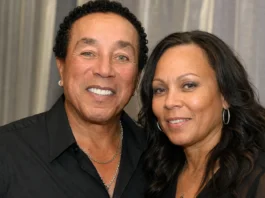
Peter Orszag is one of those public figures whose career explains far more about him than any search trend ever could. The phrase “Peter Orszag bald” may bring readers to his name, but it doesn’t define the man behind it. There is no reliable public record showing that Orszag has discussed being bald, wearing a wig, having a hair transplant, or receiving hair-loss treatment.
What is verified is far more substantial. Orszag has moved through some of the most powerful rooms in American public policy and global finance, from the Congressional Budget Office to the Obama White House and then to Lazard. His career connects federal budgets, health policy, Wall Street advisory work, and the future of a major financial firm.
Is Peter Orszag Bald?
The direct answer is simple: there is no authoritative evidence confirming that Peter Orszag is bald in any meaningful public or medical sense. Some online pages have targeted the phrase “Peter Orszag bald,” but those pages mostly appear to be search-driven appearance commentary. They don’t provide verified statements from Orszag, his representatives, medical professionals, or credible news outlets.
That matters because appearance-based searches can create the illusion of a story where none has been established. Public figures are photographed under different lighting, at different ages, and from different angles, and internet speculation often fills the gaps. In Orszag’s case, the responsible approach is to say what can be proven: his hair has attracted some online curiosity, but his public record contains no confirmed hair-loss story.
Early Life and Family Background
Peter Richard Orszag was born on December 16, 1968, in Boston, Massachusetts. Public sources connect his early life to Massachusetts, including Lexington, though the most secure facts about his background begin with his education and early academic path. He came from a family environment often described in connection with learning and scholarship, including a father, Steven Orszag, known as a mathematician.
The details of Orszag’s childhood are not as publicly developed as his adult career. That is not unusual for economists and policy officials, whose public lives tend to begin with universities, government appointments, and institutional work rather than childhood profiles. A careful article should avoid inventing family scenes, early ambitions, or private memories that have not been placed on the record.
What can be said is that Orszag’s later path shows early intellectual strength. He studied economics at Princeton University and graduated summa cum laude in 1991. That academic distinction became the first clear marker of a career built around numbers, policy choices, and the real-world consequences of public spending.
Education and Academic Formation
After Princeton, Orszag continued his studies in the United Kingdom. He earned a Ph.D. in economics from the London School of Economics as a Marshall Scholar. That training placed him in a tradition of economists who move between research, public policy, and institutional leadership.
His education also helps explain the shape of his career. Orszag has rarely been a narrow specialist in only one sector. He has worked in academia, government, financial services, and public commentary, often at the border between economic theory and high-stakes decision-making.
The combination of Princeton, the London School of Economics, and early government service gave him the profile of a policy economist before he became a Wall Street executive. His career has always depended on translating complex financial and budget questions for leaders who must act on them. That skill became especially visible during his years in Washington.
Early Government Work
Orszag’s early government career began during the Clinton administration. In 1995 and 1996, he worked at the President’s Council of Economic Advisers, first as a staff economist and later in senior advisory roles. From 1997 to 1998, he served as Special Assistant to the President for Economic Policy.
Those roles placed him close to federal economic decision-making while he was still relatively young. They also linked him to a generation of Democratic policy figures who saw economic analysis as a central tool of government. Orszag’s later career would return to that same pattern: budgets, health costs, long-term fiscal pressures, and the problem of governing with limited resources.
After his Clinton-era service, Orszag built a strong policy and academic profile. He worked at the Brookings Institution, where he was associated with economic studies and public-policy research. His work there helped set the stage for his next major public role.
Congressional Budget Office Leadership
In 2007, Orszag became Director of the Congressional Budget Office. The CBO is one of Washington’s most important institutions because lawmakers rely on it for budget projections, cost estimates, and economic analysis. It is also a role that requires credibility across political lines.
Orszag led the CBO during a period when health-care costs, long-term debt, and the financial system were becoming urgent national concerns. The archived White House biography of Orszag later emphasized that the agency expanded its attention to health care and climate change during his tenure. Those subjects would follow him into the Obama administration.
His CBO work helped make him a more visible figure in Washington. He was not a celebrity official, but he became known among policymakers as a serious analyst of federal spending and economic trade-offs. That reputation helped lead to one of the most demanding jobs in the federal government.
Obama Administration and the Office of Management and Budget
In January 2009, Peter Orszag became Director of the Office of Management and Budget under President Barack Obama. He served until July 2010, during a period shaped by the financial crisis, the American Recovery and Reinvestment Act, and the long fight over health-care reform. It was a short tenure by calendar time, but it came during one of the most intense policy stretches of the Obama presidency.
The OMB director sits at the center of federal budget planning. The job requires both technical command and political judgment, since budget choices affect nearly every part of the federal government. Orszag’s background at CBO made him especially prepared for the numbers, but the Obama years also tested his ability to operate inside a fast-moving White House.
Columbia’s Obama Presidency Oral History links Orszag’s service to the Recovery Act and the Affordable Care Act period. That connection matters because health-care costs had long been one of his major policy concerns. His public reputation in those years was tied less to slogans than to charts, cost curves, fiscal projections, and the argument that health policy and budget policy could not be separated.
From Washington to Finance
After leaving the Obama administration, Orszag moved deeper into finance and public commentary. He later held senior roles at Citigroup before joining Lazard in 2016. The shift from government to finance drew attention, as such moves often do, but it also fit the broader pattern of his career.
Orszag’s expertise was valuable to financial institutions because he understood policy risk, economic systems, and government decision-making. In modern finance, those issues can shape markets as much as company earnings or interest rates. A former OMB director brings a perspective that purely private-sector executives may not have.
At Lazard, Orszag joined a firm with a long history in financial advisory and asset management. He eventually became CEO of Lazard’s Financial Advisory business from 2019 to 2023. That role prepared him for firmwide leadership at a time when Lazard was looking for growth, sharper execution, and a clearer long-term plan.
CEO and Chairman of Lazard
Orszag became CEO of Lazard in October 2023 and is listed by the company as CEO and Chairman. Lazard’s official biography describes him as a leader whose career spans finance, public policy, and academia. That mix is central to understanding why he was chosen for the top job.
The firm’s 2024 annual report presented 2024 as the first year of executing the Lazard 2030 strategy. That plan included a goal of doubling firmwide revenue by 2030 from the 2023 level. The report also said Lazard produced adjusted net revenue of $2.9 billion in 2024, up 18 percent from the prior year.
Orszag’s leadership has been linked to hiring, productivity, private capital, and artificial intelligence. Financial reporting in 2025 described him as putting AI and dealmaker hiring near the center of Lazard’s growth plan. By 2026, he was still speaking publicly about mergers and acquisitions, regulation, technology, and the forces shaping deal activity.
Personal Life and Marriage
Peter Orszag is married to Bianna Golodryga, a journalist known for her work with CNN. Lazard’s official biography confirms the marriage, making it one of the clearer publicly verified details of his personal life. The couple’s public profile is shaped by two demanding careers, one in global finance and policy, the other in international news.
Public secondary sources commonly report that Orszag has five children. The names and details of all children are not consistently presented in reliable public sources, so a careful account should not overstate what is known. His family life is real, but it should be treated with restraint rather than turned into gossip.
That restraint is especially important in an article connected to appearance-based searches. Orszag is a public figure because of his work, not because he has invited attention to private family matters. A respectful profile can acknowledge his marriage and children without intruding into areas that have not been clearly shared.
Net Worth, Compensation, and Sources of Wealth
Peter Orszag’s exact net worth is not reliably verified in public sources. Some websites publish estimates, but those figures are not strong enough to treat as fact without transparent sourcing. For a publication-ready article, it is safer to discuss his known roles and reported executive compensation rather than claim a precise fortune.
His wealth sources are easier to describe in broad, verified terms. Orszag has earned income through senior positions in government, finance, executive leadership, advisory work, and public-policy roles. His current role as CEO and Chairman of Lazard is the most important source of his present business profile.
Public compensation aggregators have reported large annual pay packages tied to his Lazard leadership, including figures in the eight-figure range for recent fiscal years. Those numbers should be checked directly against Lazard proxy filings before being used as final, fixed amounts. The key point is that Orszag is a highly paid financial executive, but his total personal wealth cannot be stated with confidence from the available record.
Recognition and Public Reputation
Orszag’s reputation rests on seriousness, technical fluency, and access to powerful institutions. Lazard lists him as a member of the National Academy of Medicine, the Council on Foreign Relations, and the Aspen Economic Strategy Group. Those affiliations reflect a career that extends beyond investment banking into health policy, economics, and public affairs.
One lesser-known detail is his connection to health-policy debates long before he led Lazard. His work at CBO and OMB placed him close to questions about how health costs shape the federal budget. That subject may sound dry, but it has affected some of the largest domestic policy fights in modern American politics.
Another underused fact is that Orszag has served in both the Clinton and Obama administrations. That gives him a longer public-policy history than many people who know him only as Lazard’s CEO may realize. His career is not a simple move from Washington to Wall Street; it is a long movement between research, government, and finance.
What Peter Orszag Is Doing Now
As of 2026, Peter Orszag remains CEO and Chairman of Lazard. His current public role is focused on guiding the firm’s long-term strategy, including the Lazard 2030 plan. The company’s 2024 annual report framed that plan around revenue growth, shareholder returns, advisory strength, and asset-management goals.
Recent reporting has connected Orszag with discussions about AI, private credit, hiring senior dealmakers, and the changing M&A market. In 2025, he was reported as emphasizing AI and talent as parts of Lazard’s growth plan. In 2026, he continued to comment on the deal environment, including forces driving mergers and acquisitions despite global uncertainty.
That present-day role gives the “Peter Orszag bald” search a strange contrast. The internet may ask about hair, but Orszag’s actual public work concerns capital markets, corporate strategy, regulation, and technology. His current influence is measured less by online curiosity than by what happens at Lazard under his leadership.
Why the Hair Search Does Not Define Him
The phrase “Peter Orszag bald” is best understood as a search trend, not a verified biographical fact. It reflects the way online attention often attaches itself to visible public figures for reasons that have little to do with their work. In Orszag’s case, the available evidence does not support making claims about wigs, hair treatment, or medical hair loss.
A responsible article can answer the search directly without feeding speculation. Yes, readers may notice changes in appearance over time, as they would with any public figure who has spent decades in front of cameras. But appearance alone is not evidence, and it should not be treated as a hidden story.
The more useful question is why such searches happen in the first place. Orszag has appeared in government settings, television interviews, finance conferences, and public business coverage for many years. Visibility creates curiosity, and curiosity often becomes search traffic, even when the underlying topic is thin.
Frequently Asked Questions
Is Peter Orszag bald?
There is no reliable public evidence confirming that Peter Orszag is bald in a way that has been formally discussed or documented. Some search-driven pages focus on his hair, but they do not provide strong sourcing. The safest answer is that his appearance has drawn online curiosity, while his public record contains no verified hair-loss disclosure.
Does Peter Orszag wear a wig or toupee?
There is no credible evidence that Peter Orszag wears a wig or toupee. No authoritative interview, official statement, or reputable news report has confirmed such a claim. Any article making that assertion without sourcing should be treated with caution.
Who is Peter Orszag?
Peter Orszag is an American economist, former government official, and business executive. He served as Director of the Congressional Budget Office and later as Director of the Office of Management and Budget under President Barack Obama. He is now CEO and Chairman of Lazard.
Who is Peter Orszag married to?
Peter Orszag is married to Bianna Golodryga, a journalist associated with CNN. Their marriage is confirmed in Lazard’s official biography of Orszag. Public sources commonly report that he has five children, though details about all of them are not consistently public.
What is Peter Orszag’s net worth?
Peter Orszag’s exact net worth is not reliably verified. Some websites publish estimates, but they do not provide enough transparent evidence to treat those numbers as fact. His known financial profile comes from senior roles in finance, including his leadership position at Lazard.
Conclusion
Peter Orszag’s life is far more substantial than the search phrase that often trails his name. “Peter Orszag bald” may be the keyword some readers type first, but it leads to a much deeper story about power, policy, money, and institutions. The hair question can be answered briefly: there is no verified public story there.
What remains is the career of a serious economist who moved from Princeton and the London School of Economics into the highest levels of American budget policy. He led the Congressional Budget Office, served in the Obama White House, and then crossed into finance. Each stage added a new layer to his public identity without erasing the one before it.
At Lazard, Orszag now stands in a role that tests a different kind of leadership. He is no longer only explaining budgets or advising policymakers; he is running a major financial firm through a period shaped by AI, private capital, and shifting deal markets. That is where his current reputation will be judged.
The fairest way to see Peter Orszag is not through a rumor, a photo, or a search-engine phrase. It is through a record built across government, economics, and finance over more than three decades. As of 2026, his story is still active, and the next chapter will likely be written through Lazard’s results rather than internet speculation.