

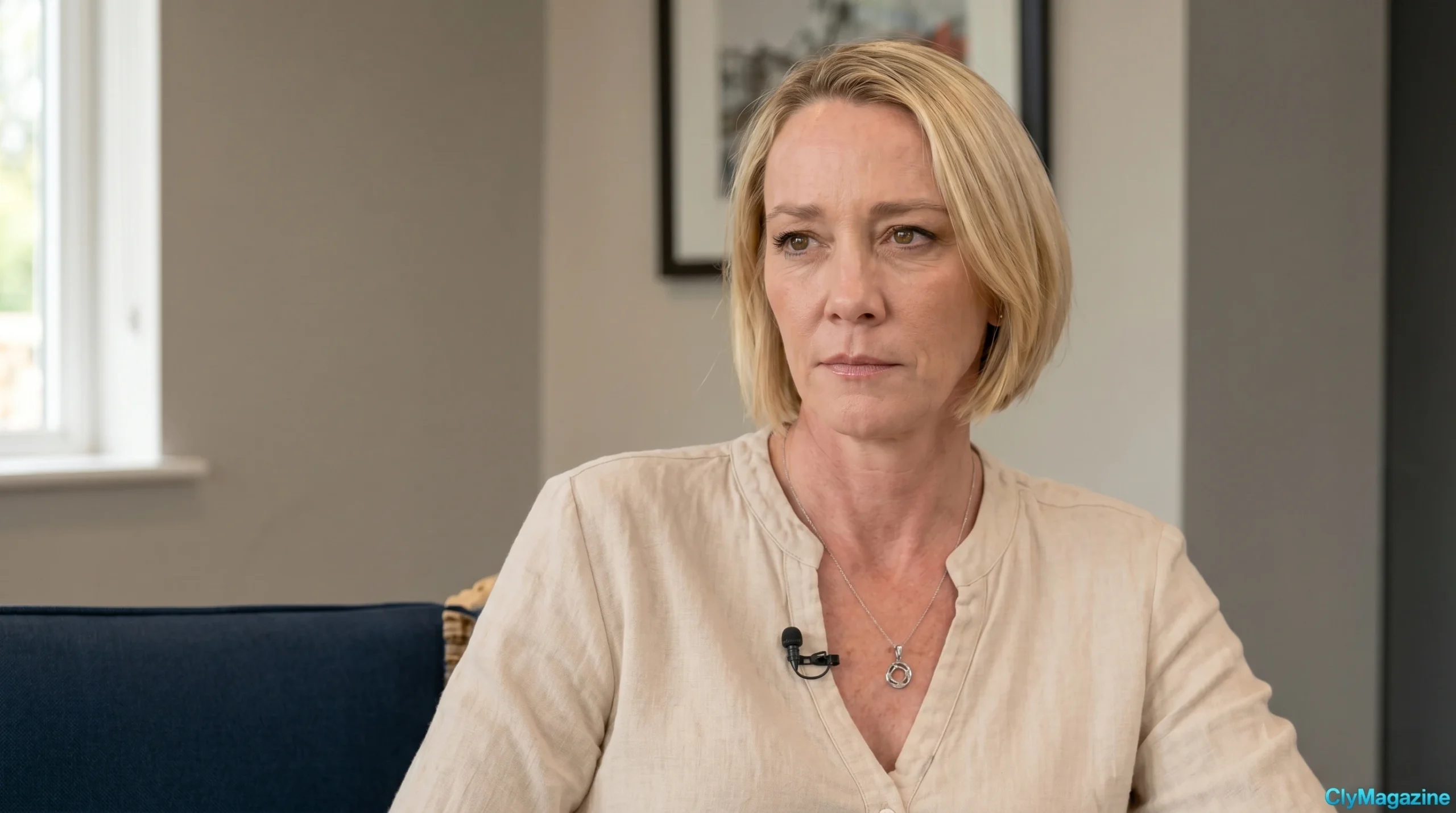
Claire Pearsall is best known to many viewers as a clear, often forceful voice in British political debate, but her public commentary rests on a career built far from the studio lights. Before becoming a familiar presence on programmes such as GB News, Sky News, BBC outlets, LBC, and Channel 5, she spent years inside the working machinery of Westminster. Her background includes parliamentary staffing, Conservative politics, immigration policy, and local government. That mix gives her public profile a practical quality: she speaks less like an outside observer and more like someone who has worked inside the rooms where political decisions are shaped.
Her biography is also a reminder that not every public figure has a neatly documented private life. Some details that readers often search for, including her birth date, birthplace, parents, education, children, and net worth, are not confirmed by strong public sources. What can be verified is her professional record: nearly two decades of parliamentary experience, service as a Home Office special adviser during the Brexit transition, eight years as a Sevenoaks District councillor, and continuing work as a media commentator. For a trustworthy profile, that verified public record matters more than copied claims from weak biography pages.
Early Life and Family Background
Reliable public information about Claire Pearsall’s early life is limited. Her childhood, parents, siblings, birthplace, and family background have not been confirmed in strong public records or reputable interviews. That absence should not be treated as mystery or secrecy; many political advisers and commentators have public careers without placing their early lives into the media record. A careful biography has to respect that boundary rather than filling it with guesswork.
What can be said is that Pearsall’s adult career is firmly rooted in British public life. Her work has centered on Parliament, Conservative politics, local government, immigration policy, and broadcast debate. Those professional settings suggest a career shaped by political process and public service rather than celebrity culture. Her reputation has been built through roles that required judgment, message discipline, and a working knowledge of how government operates.
Education and Early Influences
Claire Pearsall’s education has not been reliably documented in public sources. No confirmed school, university, degree, or formal training record is available from the strongest sources used for her public biography. Some low-quality profile pages make claims about her background, but those claims are not supported well enough to publish as fact. A serious profile should leave this part of her life open unless a primary source or direct interview confirms it.
Even without verified school details, her career shows the kind of training that comes from long exposure to Westminster. Parliamentary staff work requires speed, discretion, political awareness, and the ability to handle both policy and people. Pearsall’s later roles suggest that she learned politics through practice, not only through theory. That practical education appears to be central to the public figure she became.
Parliamentary Career and Westminster Experience
The foundation of Claire Pearsall’s public career is her long experience in Parliament. A 2025 public profile described her as having 19 years of parliamentary experience and 13 years as chief of staff to a senior Conservative MP. A 2022 speaker profile gave similar figures, listing 18 years in Parliament and 12 years as chief of staff. The small difference appears to reflect the passage of time rather than a contradiction.
The specific senior Conservative MP she served has not been clearly confirmed in the strongest public sources. That matters because chief of staff work is often influential but not always publicly visible. Such roles can involve diary control, policy briefings, media handling, stakeholder contact, and constituency issues. Pearsall’s later media work makes more sense when viewed against that background of close exposure to political strategy and daily parliamentary pressure.
Her Westminster experience also gave her a bridge between political operations and public explanation. Advisers and senior staff often have to translate complex policy debates into direct language for ministers, MPs, journalists, and constituents. Pearsall’s broadcast style reflects that habit of cutting quickly to the practical point. She is not presented in reliable sources as an elected national politician, but as someone who spent years close to the political process.
Home Office Special Adviser Role
One of the most important verified chapters in Claire Pearsall’s career was her time at the Home Office. Public profiles state that she spent 18 months as a special adviser to the Minister for Immigration during the Brexit transition. Her work was linked to the EU Settlement Scheme and planning for future borders and immigration policy. Those were high-pressure areas of government after the UK’s decision to leave the European Union.
The EU Settlement Scheme was one of the central administrative tasks of the Brexit period. It affected the legal status of EU citizens living in the United Kingdom and required communication between government, Parliament, officials, and the public. Pearsall’s adviser role placed her near a policy area that was politically sensitive and personally important to many families. That experience later gave her a firm basis for commenting on immigration, borders, and Conservative policy.
Special advisers occupy a distinctive place in British government. They are political appointees rather than permanent civil servants, and they help ministers manage policy, communications, and political priorities. Pearsall’s Home Office role therefore adds weight to her later public identity as a commentator on government and immigration. It also separates her from commentators whose experience is limited to media analysis alone.
Sevenoaks District Council Career
Claire Pearsall also served in local government, representing Ash and New Ash Green on Sevenoaks District Council. Official election records show that she was elected as a Conservative councillor in May 2015 with 1,586 votes. She was re-elected in May 2019 with 809 votes. Public profiles state that her council service ran from May 2015 to May 2023.
Local council work is often less visible than Westminster politics, but it can be demanding in different ways. Councillors deal with planning, local services, resident concerns, public meetings, and party responsibilities at the community level. Pearsall’s council record shows that her political experience was not limited to Westminster offices or broadcast studios. She also had direct exposure to the everyday expectations placed on elected local representatives.
A 2025 profile also connects her council service with governance work, public contact, meetings, budgets, and sensitive issues. Those details help explain why she is often framed as a commentator with hands-on political experience. The combination of parliamentary staffing, government advising, and local elected office is relatively uncommon among media contributors. It gives her biography a wider base than a simple “TV pundit” label would suggest.
Media Career and Public Commentary
After years in political roles, Claire Pearsall became more visible as a broadcast commentator. Public profiles connect her with appearances on Sky News, BBC News Channel, Channel 5 News, GB News, LBC, Radio 5 Live, and BBC regional radio. IMDb also lists appearances connected to Sky’s All Out Politics and later political programming, though IMDb should be treated as a useful media listing rather than a primary biographical source. Her commentary work has made her name more recognizable beyond Conservative political circles.
Pearsall’s media role is best understood as political commentary rather than traditional reporting. She is usually identified through her background as a former Conservative adviser, former Home Office adviser, or political commentator. That distinction matters because she speaks from a partisan and professional political background, not as a neutral news correspondent. Her value to broadcasters comes from her ability to interpret political events through experience inside the system.
In January 2024, GB News identified her as a former Home Office special adviser when covering her view that replacing Rishi Sunak before the general election would be “utterly bonkers.” That appearance placed her in a familiar role: assessing Conservative strategy from the viewpoint of someone who knows party politics from the inside. In 2025 and 2026, she continued to appear in media discussions on migration, welfare, and government policy. Those recent appearances show that her public work remained active well after her council service ended.
Marriage to Nigel Nelson and Personal Life
Claire Pearsall is publicly described as married to Nigel Nelson, a British political journalist and commentator. GB News referred to them as a married duo during a 2025 discussion about migration policy. IMDb also lists each as the other’s spouse, though it is not the strongest source for personal biography. The marriage itself is publicly supported, but the exact date should be handled carefully.
Several secondary sites say Pearsall and Nelson married in January 2020, citing or echoing social media references. Because those reports are not as strong as official records or direct interviews, the date should not be stated as definite without clearer confirmation. What is safe to say is that their marriage is part of her public profile because they have appeared in media contexts together. Their shared presence in political discussion adds a human note to her story without requiring intrusion into private life.
There is no reliable public confirmation that Claire Pearsall has children. Some readers may search for that detail, but a responsible article should not invent or repeat unsupported claims. Pearsall appears to keep much of her family life outside the public record. That choice is common among people whose work is public but whose home life remains personal.
Net Worth, Income Sources, and Recognition
Claire Pearsall’s net worth is not reliably estimated in public sources. Some biography-style websites may publish figures, but those numbers are not supported by transparent evidence. There are no confirmed public records of major business deals, ownership stakes, salaries, endorsement contracts, or investments tied to her name. For that reason, any specific dollar amount would be misleading.
Her likely income sources, based only on verified career activity, include political advisory work, public commentary, and past local government service. Broadcast contributors may receive appearance fees, but no verified figures are available for Pearsall. Local councillor allowances are usually public in principle, but they should not be treated as personal wealth. A careful biography should describe the types of work she has done without guessing at her finances.
Recognition in Pearsall’s case comes less through awards and more through access, experience, and visibility. No major public honours or national awards are confirmed in the available record. Her professional standing rests on years in Parliament, an adviser role at the Home Office, elected council service, and regular broadcast appearances. That reputation is practical rather than ceremonial.
Current Work and Recent Developments
As of 2026, Claire Pearsall appears to be active primarily as a political commentator and former Conservative adviser. Her strongest public profile states that her Sevenoaks District Council service ended in May 2023. Since then, her visible work has been concentrated in media discussion rather than elected local office. She continues to be identified through her experience in Parliament and the Home Office.
Recent appearances show her commenting on Conservative politics, migration, and welfare. In 2024, she was quoted in coverage about Conservative leadership tensions before the general election. In 2025, she appeared in a GB News migration-policy discussion that also featured Nigel Nelson. In May 2026, GB News again identified her as a former Tory adviser in coverage of welfare-related political debate.
That recent activity confirms that Pearsall remains part of the UK political conversation. She is not known as a mass-celebrity figure, and her profile is more specialized than broad entertainment fame. Her audience is likely made up of viewers and readers who follow Westminster, immigration policy, Conservative politics, and current affairs programming. That public role suits the career she built before television became the most visible part of her work.
Lesser-Known Facts About Claire Pearsall
One lesser-known fact about Claire Pearsall is that her public career stretches across several layers of British politics. She has worked in Parliament, advised at the Home Office, served in local government, and appeared regularly in media debates. Those experiences are connected, but they are not the same. Each one required a different kind of political skill.
Another specific detail is her ward-level council history. She represented Ash and New Ash Green on Sevenoaks District Council and won election there in both 2015 and 2019. Her 2015 vote total was 1,586, while her 2019 total was 809. Those figures help anchor her biography in documented election records rather than vague claims about political involvement.
Her Home Office work is also more specific than some short profiles suggest. It was not simply a general adviser role; public profiles connect it to immigration during the Brexit transition, the EU Settlement Scheme, and future border planning. That detail matters because it explains why immigration often appears as one of the subjects she is asked to discuss. It also shows why her commentary is tied to direct government experience.
Public Image and Reputation
Claire Pearsall’s public image is shaped by clarity, political experience, and a willingness to argue directly. She often appears in formats where commentators are expected to disagree, test arguments, and respond quickly to breaking political claims. That kind of setting rewards confidence and speed, but it can also flatten a person into a simple partisan label. Pearsall’s longer career gives more context than a short television clip can provide.
Her reputation is strongest when described through verified roles rather than broad praise. She has been a Westminster staffer, chief of staff, Home Office special adviser, local councillor, and media commentator. Those roles show a career built around politics as work, not politics as occasional opinion. They also explain why broadcasters call on her when debates turn to government, Conservative strategy, immigration, and public policy.
At the same time, a fair profile should avoid overstating her public rank. She has not been confirmed as an MP, cabinet minister, or national party leader. Her influence has come through advisory, local, and media roles rather than national elected office. That distinction makes her story more precise and more credible.
Frequently Asked Questions
Who is Claire Pearsall?
Claire Pearsall is a British political commentator, former Conservative councillor, and former political adviser. She is known for her years in Parliament, her work as a Home Office special adviser, and her appearances on UK current affairs programmes. Her public profile is tied closely to Conservative politics and policy debate. She is best described as a political insider turned media commentator.
Was Claire Pearsall a councillor?
Yes, Claire Pearsall served as a Conservative councillor on Sevenoaks District Council. She represented Ash and New Ash Green and was elected in 2015 and re-elected in 2019. Public profiles state that she served from May 2015 to May 2023. Her council career adds a local government chapter to her wider Westminster and media background.
What did Claire Pearsall do at the Home Office?
Claire Pearsall served for 18 months as a special adviser to the Minister for Immigration during the Brexit transition. Public profiles link that work to the EU Settlement Scheme and future borders and immigration planning. This role placed her close to one of the most sensitive policy areas in post-Brexit Britain. It is one of the clearest reasons she is often asked to comment on immigration and government policy.
Is Claire Pearsall married to Nigel Nelson?
Yes, public media references describe Claire Pearsall as married to British political journalist Nigel Nelson. GB News referred to them as a married duo during a 2025 migration-policy discussion. The exact date of their marriage is less strongly sourced, though some secondary reports place it in January 2020. A careful article should confirm the marriage but avoid overstating details that are not fully verified.
What is Claire Pearsall’s net worth?
Claire Pearsall’s net worth is not reliably known. No strong public source confirms her salary, assets, business holdings, or total wealth. Some websites may give figures, but those estimates are not supported well enough to use. The safest answer is that her income appears connected to political advisory work, commentary, and past public service, but no verified net worth figure is available.
Conclusion
Claire Pearsall’s biography is not the story of a celebrity who became political. It is the story of someone whose public voice grew out of years spent inside politics itself. Her path runs through Parliament, the Home Office, local government, and television studios. That progression gives her commentary a grounded quality, even when viewers may disagree with her views.
Her public record also shows why accuracy matters in writing about people with semi-public lives. The verified facts are strong enough to tell a clear story, but many private details remain unconfirmed. A good biography does not need to invent childhood scenes, family claims, or wealth estimates to make her life interesting. The documented career already explains why she has become a recognizable voice in British current affairs.
Pearsall’s standing rests on experience rather than spectacle. She has worked close to policy, served a local electorate, advised during a major political transition, and carried that knowledge into public debate. That combination makes her a useful figure for readers trying to understand how political commentary often draws from work done behind the scenes. Her story is strongest when told with restraint, detail, and respect for what is known.
Looking ahead, Claire Pearsall’s public role appears likely to remain connected to political analysis and media discussion. Her background gives her a continuing place in debates about Conservative politics, immigration, welfare, and government decision-making. As British politics keeps changing, voices with direct experience inside the system will remain in demand. Pearsall’s career shows how influence can move from Westminster offices and council chambers into the wider public conversation.


